
MPR vs MERV:
Which is better?
-
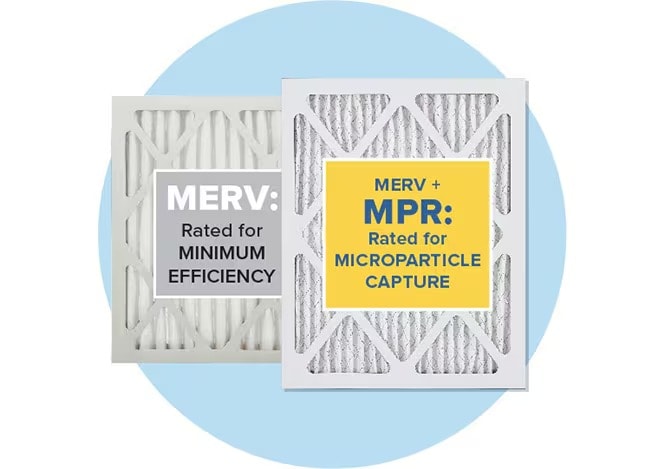
MPR (Microparticle Performance Rating):
Designed to measure the capture of more microscopic particles.
-
MERV (Minimum Efficiency Reporting Value):
An industry standard for particle capture measurement.
-
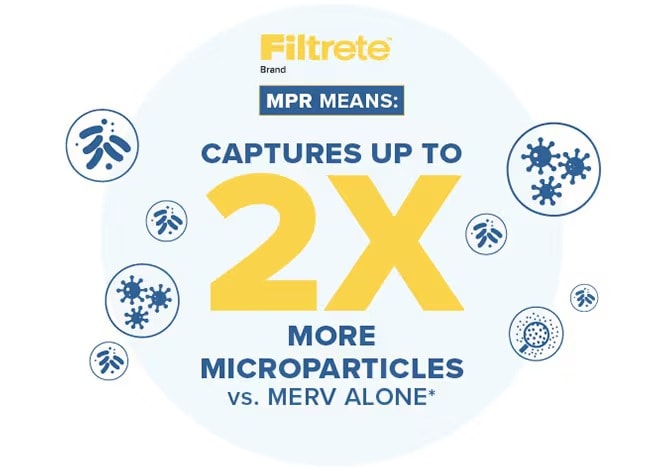
MPR Means More
Filtrete™ Brand technology captures more of the small, microscopic particles than the industry standard requires – which aren't even measured by the MERV scale until it reaches MERV 11.
Filters rated with MERV alone may filter out large, common particles - like dust lint or pollen – for MERV 10 and lower. They are not required to trap small particles. Every level of MPR-rated filters requires the capture of microscopic particles, from MPR 300 - 2800. -
-
-
The Minimum Wasn’t Good Enough
The MERV scale was developed in 1987 to serve as a minimum baseline for air filter performance. Filtrete™ Brand’s filtration capacity quickly outpaced the metrics established by that scale. MERV wasn’t telling the whole story.
Scientists at 3M developed the MPR rating to raise the standards of the industry and to demand a higher level of performance from our own air filters. If we’ve learned anything from the last few years, it’s that keeping your home safer from harmful microscopic particles is a responsibility that can’t be taken lightly.

The smallest
microparticles
matter most.
Particles smaller than 1 micron, like bacteria, viruses and
exhaust,
are much smaller than the eye can see—small
enough to be inhaled and
then absorbed into the
bloodstream.
MPR-rated Filtrete™ Air Filters capture more
microscopic particles at every level, keeping more of
these out of the air in your home.
The MPR system is the superior standard.2
The MPR indicates the filters ability to capture tiny particles between 0.3 and 1 micron in size. The higher the MPR, the more microparticles — such as pollen, pet dander, smoke, bacteria and viruses — your filter will capture.1,2
| MERV 5 |
| MPR 300 |
| MERV 7 |
| MPR 600 |
| MERV 11 |
| MPR 1000 |
| MPR 1200 |
| MERV 12 |
| MPR 1500 |
| MERV 13 |
| MPR 1900 |
| MPR 2200 |

|

|

|
|
| MERV 5 | N/A | N/A | 20% |
| MPR 300 | 12% | 38% | 34% |
| MERV 7 | N/A | N/A | 50% |
| MPR 600 | 23% | 54% | 55% |
| MERV 11 | 20% | 65% | 85% |
| MPR 1000 | 41% | 77% | 88% |
| MPR 1200 | 43% | 78% | 88% |
| MERV 12 | 35% | 80% | 90% |
| MPR 1500 | 54% | 83% | 90% |
| MERV 13 | 50% | 85% | 90% |
| MPR 1900 | 62% | 87% | 95% |
| MPR 2200 | 69% | 90% | 96% |
-

How often should you change your filter? We've got answers to this and other questions.
-

Every home and family is different. From allergens to pets to climates you live in, a variety of factors should influence your air filter purchasing decision. Use our guide to help find the best Filtrete™ Filter for your home.
-

Find Filtrete™ Filters in-store or online.
